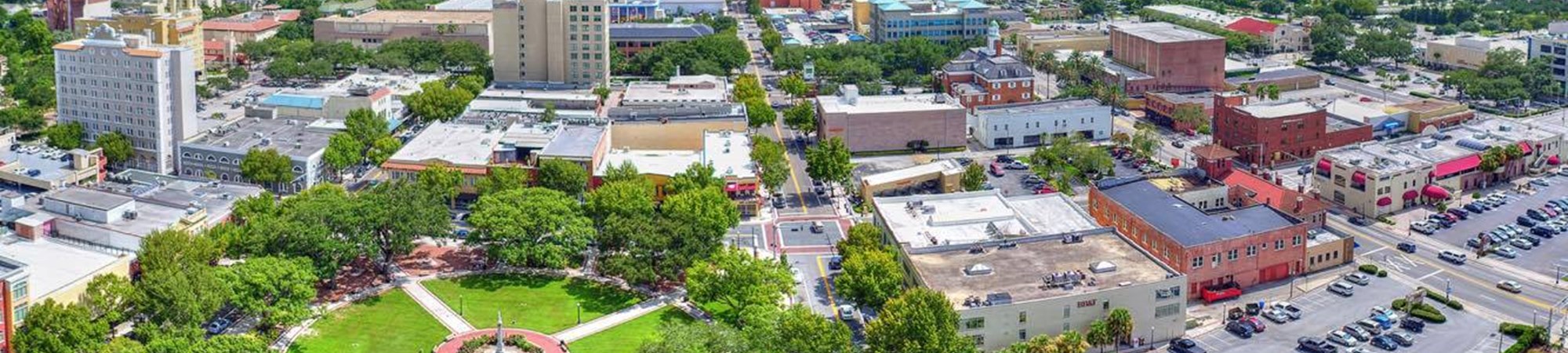
Masthead - Image
Home   •   Departments   •   Citizens   •   Business   •   Leisure   •   Online Payments   •   Downtown Wireless
Community Redevelopment Agency
Lake Mirror Swan

CRA HOME

CRA ANNUAL REPORTS
REQUEST FOR PROPOSALS
FREQUENTLY ASKED
  QUESTIONS


DIXIELAND HOME

WHAT'S NEW
SOUTH FLORIDA AVENUE
  PROJECTS

HISTORY
ABOUT US
PROPERTY OWNERS
  INFORMATION

BUSINESS OWNERS
  INFORMATION

RELATED LINKS

MID TOWN HOME

MAPS
PLANS & STUDIES
BOARD MEMBERS
MEETING SCHEDULE &
  MINUTES


DOWNTOWN HOME

QUIET ZONE

WILLIAMS HOME

MAPS

CONTACT US


LeftNav - Right Corner Image Main   >   Comm Dev   >   Comm Dev CRA
Frequently Asked Questions about the Community Redevelopment Agency

What is a Community Redevelopment Agency (CRA)?
A Community Redevelopment Agency (CRA) is a dependent taxing district established by City government for the purpose of carrying out redevelopment activities that include reducing or eliminating blight, improving the tax base, and encouraging public and private investments in the CRA. The City Commission is the official Community Redevelopment Agency for Lakeland.

Why create a CRA?
CRAs are created to assist local municipalities in pursuing redevelopment in targeted areas that are characterized by blight and disinvestment. By establishing a CRA, local governments are given a financial and planning mechanism by which to redevelop areas where private market forces aren’t working.

Where are Lakeland’s Community Redevelopment Areas or CRA districts?
Lakeland has four CRA target areas, or CRA districts. They are Downtown (www.ldda.org) which was established in 1977, Dixieland and Mid Town which were created in 2001 (see maps), and Williams which was created in 2002.

What are Community Redevelopment Trust Funds, Tax Increments, and Tax Increment Financing (TIF)?
Community Redevelopment Trust Funds are created for each of the CRA districts as a means of holding revenues to be reinvested in the CRA.

The tax increment is made up of property taxes contributed by the City and County to the Community Redevelopment Trust Fund. The tax increment is calculated annually based on increases to property values within the designated CRA districts using the year in which they were established as the “base year”. For example, if an unimproved property was valued at $10,000 in the base year and a new house is built on the property tomorrow, the new value of the property is $25,000. The incremental difference in value (new assessed value – base year value) is $15,000. Taxes collected on the property will be split amongst the City, County and CRA according to these differences in value with the CRA receiving all taxes assessed on the incremental increase of $15,000. Revenues generated by improvements in the CRA districts are to be reinvested in the district to continue to spur redevelopment.

Tax Increment Financing (TIF) is a revenue mechanism that pledges the anticipated future CRA revenues to pay the debt service on revenue bonds. Revenue bonds are used to pay for improvements within the CRA districts as outlined in the redevelopment plans.

Will my taxes rise as a result of creating a CRA?
Not in Mid Town, Dixieland or Williams. A CRA does not levy taxes, it redistributes property tax payments that are already made to the City and County.

In the case of the Downtown CRA, the Lakeland Downtown Development Authority has taxing authority and assesses an additional 1.956 mill tax on property owners within the Downtown CRA. These funds are then channeled back into redevelopment activities within the Downtown district.

What type of redevelopment activities will happen in the CRA districts?
Redevelopment activities are outlined in each of the CRA district Redevelopment Plans. The Redevelopment Plan is a document that is approved by both the City and County at the time that the CRA district is created. The Redevelopment Plan outlines the goals and objectives for the district, but more importantly, it outlines programs that allow the goals to be reached. The general goals of all three of Lakeland’s CRA districts are to eliminate blight, improve public facilities, create safer traffic flows, preserve and enhance residential neighborhoods, and improve the overall economic viability of the districts. Possible programs would include street improvements, park improvements, development of infill housing, recruitment of new businesses and partnerships with job-training and placement services. Most programs are designed to encourage private developers to invest in CRA districts.

What is the timeframe for seeing change?
Deterioration of many of the neighborhoods within the districts took place over the course of many, many years. As a result, reversing that process will take a long-term, sustained effort. In the beginning stages of CRA districts, the tax increment is relatively small and the majority of the activities will be related to planning, strategy and goal-setting. As the plans are developed and the increment grows, the opportunities for larger, more visible projects will emerge. Keep in mind that the Downtown CRA was created in the early 1970s and it has taken years to see the cumulative effects of many of the improvements.

What is the governance structure of the CRA districts?
In Lakeland, the Williams, Mid Town and Dixieland CRA districts are each governed by district Advisory Boards, the members of which are appointed by the City Commission. Because the Downtown CRA has taxing authority, its Advisory Board members must be elected by property owners within the Downtown district. Advisory Boards are responsible for making all budget, policy and project recommendations to the City Commission. The City Commission, acting as the Community Redevelopment Agency, must approve all actions.